
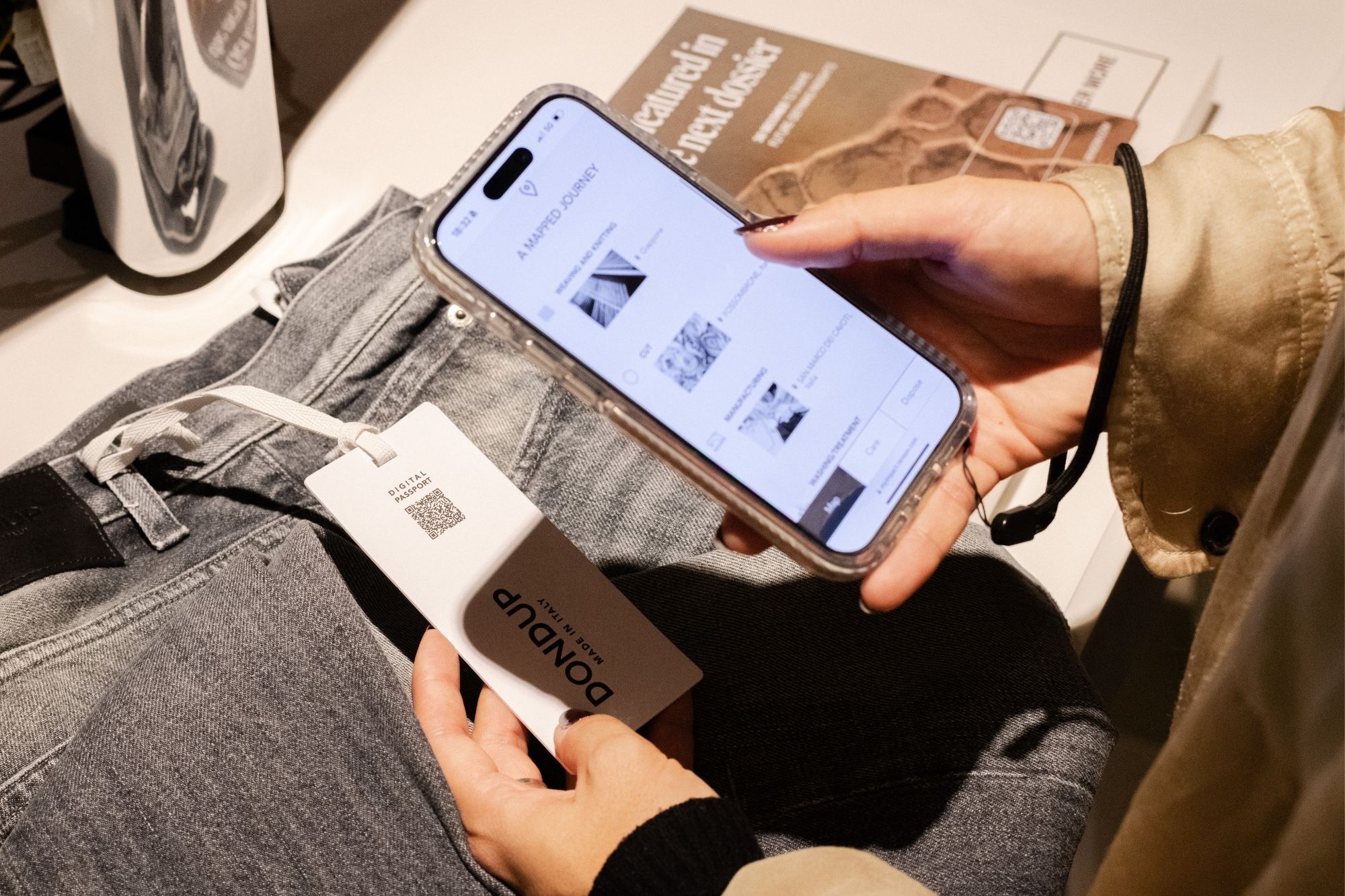
A Digital Product Passport connects a physical product with structured digital information. But there is no single universal dataset that applies to every Digital Product Passport.
Under the Ecodesign for Sustainable Products Regulation, the information required for each product category is defined through the applicable delegated act or other sector-specific legislation. This means that the data required for a battery, textile product or piece of furniture may be different.
For textiles and apparel, the final mandatory dataset has not yet been adopted. Companies can nevertheless begin preparing by distinguishing between the information required to operate the DPP system, potential product-specific regulatory data and additional information they may choose to provide.
In short, a Digital Product Passport contains seven key data areas, let’s break these down.
Every Digital Product Passport must connect the physical product with its digital record. The common DPP framework therefore relies on identifiers, data carriers and registration information.
Depending on the applicable legislation, this layer may include:
Product data is stored through a decentralised architecture, while the EU DPP Registry records unique identifiers and associated metadata needed for registration, verification and discovery.
The substantive content of a Digital Product Passport depends on the rules adopted for the relevant product category.
For textiles, areas currently being assessed include information relating to:
These areas should not be presented as a confirmed mandatory textile dataset. The final delegated act will determine which information is required, at what level of granularity and which users can access it.
Some information may be public, while other data may be accessible only to economic operators, customs or market-surveillance authorities.
The data contained in a DPP rarely comes from one system or department. It may be distributed across internal systems, documents and supply-chain partners.
Typical sources include:
The first practical step is therefore to map each data point to its source, owner, level of granularity and supporting evidence.
DPP information may be associated with a product model, a production batch or an individual item. The applicable granularity will depend on the legislation and the type of information involved.
A company should establish:
This decision affects identifiers, QR-code generation, production processes, system integrations and the volume of passports that must be maintained.
Collecting a value is not the same as demonstrating that it is reliable. Each relevant data point should be connected with the appropriate source or supporting evidence.
Depending on the information, evidence may include:
Companies should define who supplies the information, who reviews it, when it must be updated and what evidence must be retained. Third-party verification or certification may be appropriate for certain claims, but should not be described as universally required for every DPP data point.
A Digital Product Passport can also contain information and services that go beyond the mandatory regulatory dataset.
Depending on the brand and product, these may include:
These functions can extend the value of the DPP, but they should remain clearly distinguishable from information required for regulatory compliance.
Companies can begin with a structured data-readiness exercise:
This work remains useful even before the final textile dataset is adopted because it creates the governance and technical foundation needed to incorporate the confirmed requirements later.
The central question is not simply how much information can be displayed in a Digital Product Passport. Companies need to understand which information is required, where it originates, how it is supported and how it can remain accurate throughout the relevant product lifecycle.
Renoon helps fashion companies define their DPP data model, collect information from internal systems and suppliers, manage supporting evidence and publish scalable Digital Product Passports across collections.
Talk to our team about assessing your Digital Product Passport data readiness.


.png)

.avif)
.png)